What is MEDDPICC?
MEDDPICC is a way to check whether a deal is real. Each letter names one thing you should know about the buyer's side: why they'd buy, who decides, how they decide and what else they could do instead. When you can fill in every letter with what the buyer told you, you can forecast the deal and plan the next step.
It grew out of MEDDIC, which has six letters. The two added letters, Paper process and Competition, cover two places deals tend to stall late: the legal and procurement steps after a yes, and the other options the buyer is weighing, including doing nothing.
Each letter, with questions to ask
Pick a letter to see what it means, what to find out and three questions to ask. Every question here is one open question about the buyer's own situation, so you can ask it as written.
MMetrics
- What it means
- The numbers the buyer will use to judge whether the change worked: hours saved, errors cut, money kept.
- What you need to find out
- What the problem costs today, in their own units, and what result would make the project worth doing.
- You have it when
- The buyer has put a number on the problem in their own words.
- What does a bad month look like for this today?
- What does it cost the team each time this happens?
- A year from now, which number would tell you this worked?
EEconomic buyer
- What it means
- The person who can approve the spend, and can say yes when everyone else says maybe.
- What you need to find out
- Who signs, what they're measured on, and whether they agree the problem is worth solving.
- You have it when
- You know the person by name and what they care about, and you've met them or have a plan to.
- Who else will need to agree before this moves forward?
- What would your leadership need to see to approve this?
- How has a project like this been approved here before?
DDecision criteria
- What it means
- What the buyer will use to compare options: what it has to do, security, how it fits their systems, support.
- What you need to find out
- The criteria they'll score against, and which ones matter most to the people signing off.
- You have it when
- You can list their criteria in order, and you know where you stand on each one.
- What will you use to decide which option is right?
- Which of those matters most to the people signing off?
- What would rule an option out straight away?
DDecision process
- What it means
- The steps between today and a decision: who is involved, in what order, and by when.
- What you need to find out
- Each step, who owns it, and the date the buyer is working toward.
- You have it when
- You can draw the path to a signature, with names and dates on it.
- What happens between now and a decision?
- Who gets involved at each step?
- What's driving the date you're working toward?
PPaper process
- What it means
- How a signed agreement actually happens: legal review, security review, procurement and signatures.
- What you need to find out
- Every review the contract goes through, who runs it and how long it usually takes.
- You have it when
- You know every review and how long it takes, well before the deal is due.
- Once you decide, what does it take to get a contract signed?
- Who reviews security and legal terms for a purchase like this?
- How long did the last purchase like this take to get through procurement?
IIdentify pain
- What it means
- The business problem behind the deal, and what it costs if nothing changes.
- What you need to find out
- The cause, the impact and what happens if they do nothing.
- You have it when
- The buyer describes the pain and what it costs, in their words, without you supplying them.
- Where does the process break today?
- Who feels it most when it goes wrong?
- What happens if this stays the way it is for another year?
CChampion
- What it means
- Someone inside the account who wants the change, has influence, and will sell it when you're not in the room.
- What you need to find out
- Whether they have the power to move things and something to gain, and whether they'll act.
- You have it when
- They've done something for the deal: set up a meeting, shared a document, or brought you to the economic buyer.
- What would solving this change for you?
- How would you make the case for this to your leadership?
- Who might push back on this inside the company?
CCompetition
- What it means
- Every other option the buyer has, including building it themselves or doing nothing.
- What you need to find out
- What else they're considering, and why it might win.
- You have it when
- You know every alternative, including doing nothing, and why you'd win or lose against each.
- What other ways of solving this are you looking at?
- What would make leaving things as they are the better choice?
- If you built this yourselves, what would that take?
Using MEDDPICC on a live call
Don't run the letters as a script. A buyer who hears eight qualification questions in a row stops sharing. Listen for the letter they open on their own, then ask the next question about that one. Most first calls should leave you with Identify pain and Metrics; the rest fill in over the next calls.
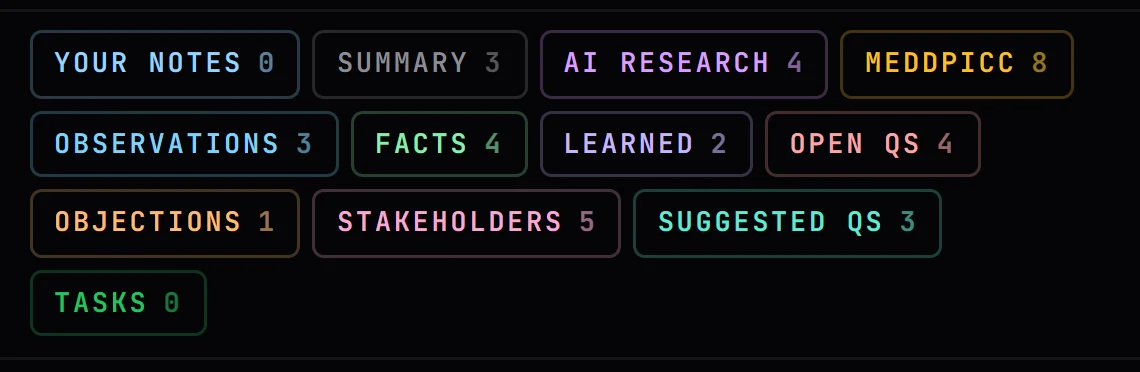
Veracity keeps track for you. Its live notes include a MEDDPICC section that fills in while you talk, and the recap after the call has Diagnosis, MEDDPICC, Risks and Improve sections. MEDDPICC also feeds the rating of your calls.
Where MEDDPICC goes wrong
- Asking every letter on the first call. It turns discovery into a form. Start with the pain and what it costs.
- Taking a title for the economic buyer. A senior title doesn't mean they sign. Ask how a purchase like this got approved before.
- Calling a friendly contact a champion. A champion acts for the deal. Someone who likes you but won't open a door is a coach, at best.
- Finding the paper process the week the deal is due. Ask about legal, security and procurement as soon as there's a decision in sight.
- Forgetting that doing nothing is competition. The status quo wins a lot of deals. Ask what makes leaving things as they are the better choice.