How does real-time sales coaching work?
A real-time coach does three things while the call is happening. Here is how Veracity does each one.
It listens to your microphone and your computer's audio, and keeps a live transcript of what you said and what the customer said.
While the customer is still answering, it writes one open question of 20 words or fewer.
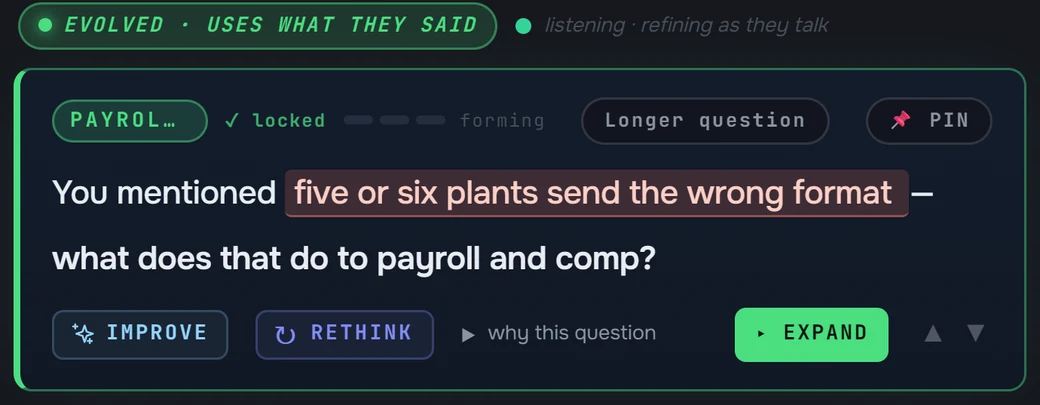
As they keep talking, the question upgrades in place to use what they just said: "You mentioned…"
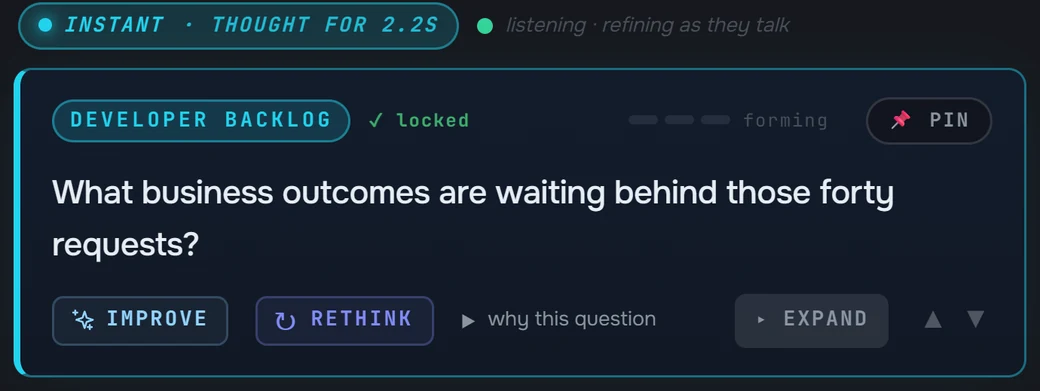
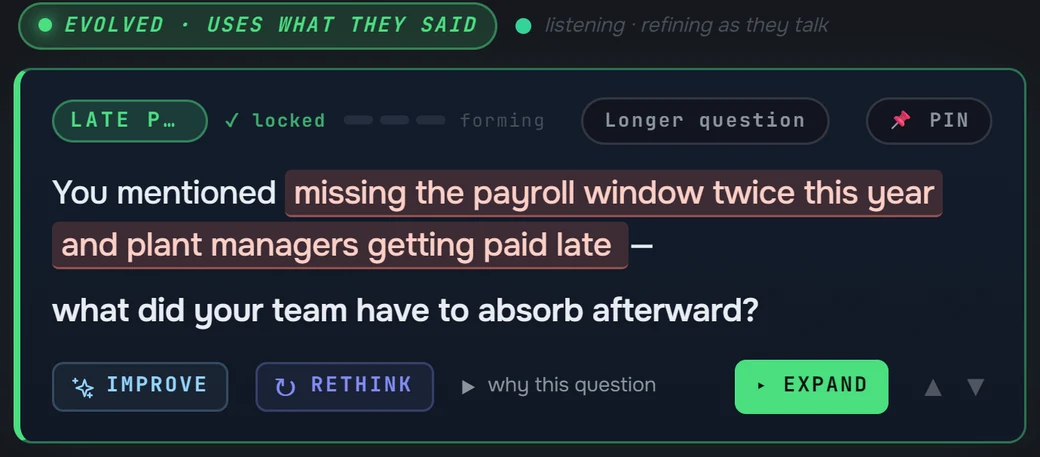
It starts before you say hello. An opening question is ready when the call starts, built from your prep, your research and your earlier calls with the account. And nothing on the card changes while you're talking, so you can glance at it when you're ready.
How is it different from call recording?
Call recording software saves the call so you can review it afterward: a recording, a transcript and notes on what happened. Real-time coaching helps while the call is still going, so the better question gets asked on this call instead of the next one.
| Call recording | Real-time coaching | |
|---|---|---|
| When it helps | After the call | During the call |
| What you get | A recording, a transcript and a review | The next question, answers from your docs, notes as you talk |
| Who uses it | The rep and their manager, later | The rep, on the call |
| Best for | Finding patterns across many calls | Getting the moment right while it's happening |
What does a good live prompt look like?
You get about two seconds to glance at a prompt mid-call. So a good one is a single question, in the buyer's own words, aimed at what the problem costs them.
Can you tell me more about that?Generic. The buyer gives you another general answer and the call stays shallow.
You mentioned five or six plants send the wrong format. What does that do to payroll and comp?It uses the buyer's own fact and asks what it does to the business.
The rules Veracity's questions follow
- One open question at a time, so a glance is enough.
- It builds on the impact, the cause or what happens next, so the buyer talks about the problem's weight.
- It uses only facts the customer said, so you never put words in their mouth.
- It never offers a menu like "is it A or B?", which lets the buyer pick an easy answer.
- Nothing on the card changes while you're talking.
When does real-time coaching help most?
On the calls where one better question, or one answer you didn't have to wait for, changes where the deal goes.
What to look for in a real-time coaching tool
- It works where you sell. Zoom, Teams, Google Meet, Webex and meetings in the room, on Windows and Mac.
- Nothing joins the meeting. An app on your computer, beside your call.
- It uses what you already know. Your research and your earlier calls with the account shape the questions.
- Answers come from your documents. Each one names the files it used, and says so when your docs don't cover it.
- Consent comes first. You confirm consent to record before every call, and the audio is never saved.
- One thing at a time. One question on screen is easier to use mid-sentence than a list of suggestions.
See how Veracity does all of it: real-time coaching for discovery calls.