The three kinds of AI sales coaching
They differ by when they help: before the call, during it, or after it. Each one fixes a different problem.
You rehearse a pitch, a discovery call or an objection against an AI buyer, and get scored. Good for building reps before a real call.
It listens to the live call and shows the next question to ask, or an answer to the buyer's question, while there's still time to use it.
After the call it recaps what happened, grades how you did and shows what to do better next time.
Which kind fixes your problem?
Start from what goes wrong on your calls today.
| What helps | Why | |
|---|---|---|
| Calls stay shallow; the buyer never gets to what the problem costs | Real-time coaching | The better question has to come while the buyer is still talking. |
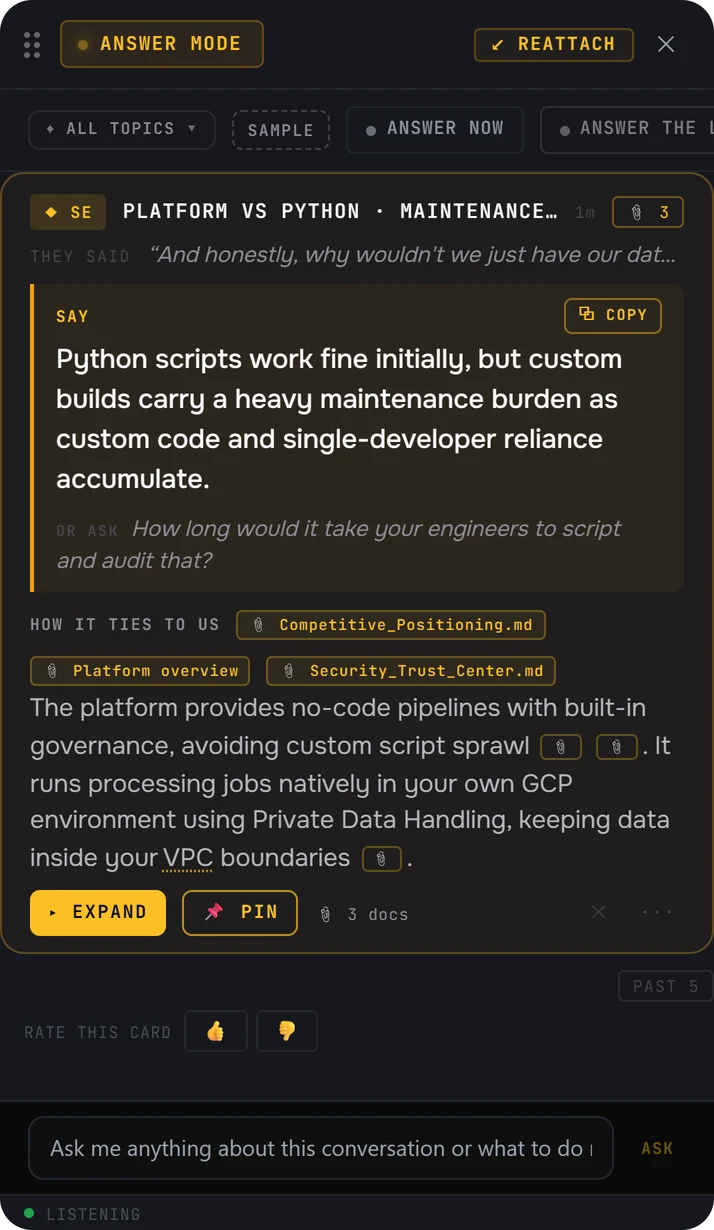
| A technical question stops the call until your SE can join | Real-time coaching with your docs | An answer from your own documents, on screen, during the call. |
| New reps are nervous before their first real calls | Roleplay practice | Rehearsal with nothing at stake. |
| Reps repeat the same mistakes call after call | Call review | A grade per call shows the pattern, and the better question to ask next time. |
| A manager can't sit in on every call | Real-time coaching and call review | Help on every call, and team scores the manager can read each week. |
What AI coaching looks like during a call
This is the moment that decides the deal, and the one no manager can be in for every rep. Here is what Veracity does while you talk.
- It hears both sides. Your microphone and your computer's audio, with a live transcript of who said what.
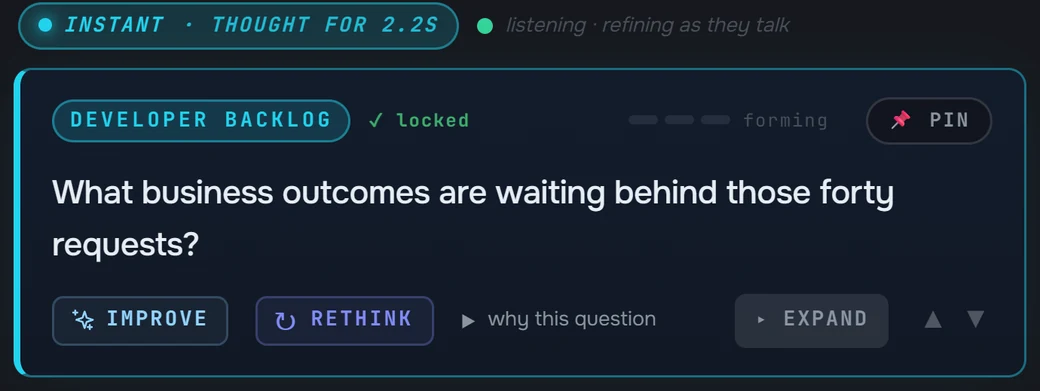
- An opening question is ready when the call starts, built from your prep, your research and your earlier calls with the account.
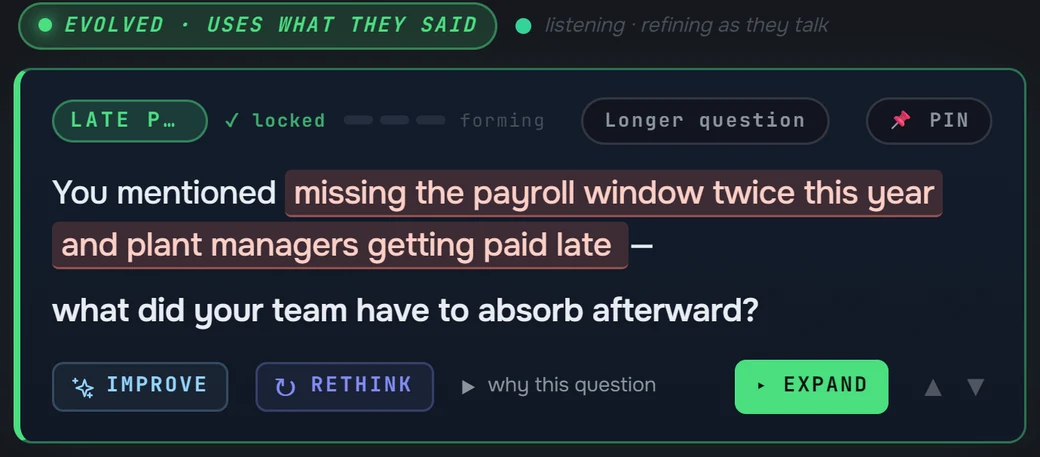
- While the buyer is still answering, it writes one open question of 20 words or fewer, then upgrades it in place with what they just said: "You mentioned…"
- Answers come from your own documents, with the files they came from named.
- Notes fill in as you talk: a summary, MEDDPICC, facts, open questions, objections, stakeholders and tasks.
- Nothing on the card changes while you're talking, so a glance is enough.
What AI coaching should give you after the call
A recording on its own is homework. Useful review tells you what to change, in a sentence you can use on the next call.
Can you tell me more about that?Generic. The buyer gives another general answer and the call stays shallow.
You mentioned five or six plants send the wrong format. What does that do to payroll and comp?It uses the buyer's own fact and asks what it costs the business.
- A recap of the call with Diagnosis, MEDDPICC, Risks and Improve sections.
- Every question graded, with the sentence you could have said instead.
- A rating that moves with your call quality, and one thing to work on next.
- Team and per-person scores by week for managers.
- The next call starts smarter. What the buyer said feeds the next call's opening question and answers.
How to choose an AI sales coaching tool
Six questions to ask any tool before your team uses it on real calls.
- When does it help? Before the call, during it, after it, or more than one. Match it to the problem in the table above.
- Does anything join the meeting? Some tools add a bot to the call. Veracity is an app on your computer, beside the call, so nothing joins.
- Does it know your product? Answers should come from your own documents and name the files they used.
- Does it know the account? Your research and earlier calls should shape the questions, so they aren't generic.
- What does the rep see mid-call? One question on screen is easier to use mid-sentence than a list of suggestions.
- How is consent handled? With Veracity you confirm consent to record before every call, and the audio is never saved.
See how Veracity does it on a real call: real-time coaching for discovery calls.