What is BANT in sales?
BANT is a checklist for deciding whether a lead is worth a sales rep's time. Each letter is one thing to settle early, usually on the first call: can they pay, who says yes, what do they need and by when.
It's short and easy to remember, so it's often the first qualification method a new rep learns. Its limits show up on bigger deals, covered further down.
What does Budget mean in BANT?
Whether the buyer can pay for a fix, and where the money would come from. Ask how purchases like this get paid for, and what the problem costs today, so the spend has something to be weighed against. You have it when you know whose budget it would come from and what else is competing for it.
- Whose budget would a fix for this come out of?
- What is this problem costing the team today?
- What else is competing for that budget this year?
What counts as Need?
The problem the buyer wants solved, and why it's worth fixing now. The other three letters depend on it: without a problem worth fixing, there's no budget to find and nothing to decide. You have it when the buyer has described the problem and what it costs, in their own words.
- What's going wrong today that made this worth a call?
- What happened the last time it broke?
- What happens if nothing changes this year?
How do you find the real Timeline?
When the buyer needs a fix in place, and what's driving that date. A date with nothing riding on it tends to slip, so ask what happens if it's missed. You have it when you know the date, what's riding on it and the steps between now and a decision.
- When does a fix need to be in place?
- What's driving that date?
- What has to happen between now and a decision?
How to ask BANT questions on a live call
Start with Need. Questions about budget and who decides land better once the buyer has described a problem worth paying to fix. After that, follow what the buyer brings up, one open question at a time, and fill in the letters as they come. A buyer who hears four screening questions in a row starts giving short answers.
Do you have budget for this?A yes or no question. "No" ends the conversation, and "yes" tells you nothing about how much or who approves it.
How have projects like this been paid for in the past?The answer tells you where the money comes from and who signs for it.
Are you the decision maker?Most people say yes, or hear that you want to go over their head.
Who else will want a say in how this gets fixed?It finds the other people involved without questioning your contact's role.
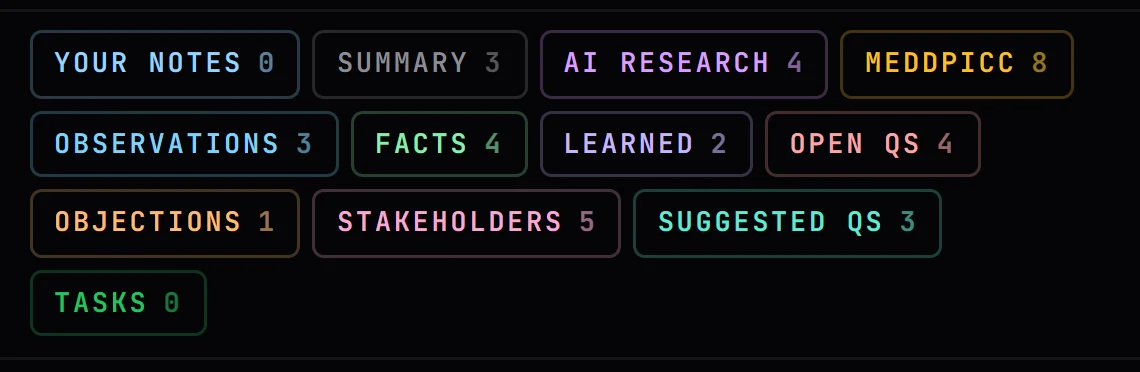
Veracity writes questions the same way. While the buyer is still answering, one open question of 20 words or fewer appears on your screen, built only on facts the buyer has said, never a menu of options. Its live notes fill in during the call, with sections for Stakeholders, Open questions and MEDDPICC, so the names you hear and what you still need to find out are written down as you go.
Where does BANT fall short on complex deals?
BANT is good at a quick screen. On a deal with several people involved, a formal buying process and months between the first call and a signature, it leaves gaps.
- "No budget" can screen out a good deal. A new problem often has no budget line yet. Buyers find money for a problem that costs enough, so treating "no budget" as a dead lead drops deals that could have closed.
- One person rarely decides. Complex purchases bring in finance, IT, legal, procurement and the team that will run it. Asking for "the decision maker" finds one name and misses the rest. See how many people decide a B2B purchase.
- Need has no size. BANT asks whether a need exists. It has no letter for what the need costs, so there's no business case and nothing to weigh the spend against.
- It skips how the deal gets done. How the buyer will compare options, the legal and procurement steps, a champion inside the account and the other options, including doing nothing, have no letter.
- It feels like a screening. The four letters tell you whether the buyer is worth your time. Asked in a row, they give the buyer nothing back.
What are the best BANT alternatives?
BANT still does a job: a fast check on an inbound lead, or a small deal one person can sign. For complex deals, two widely used alternatives cover what BANT leaves out. MEDDPICC goes deeper on who decides and how. SPICED is built around the problem, what it costs and why it's urgent. Here is where each BANT letter lands in the other two, and what they cover that BANT has no letter for.
| BANT letter | MEDDPICC | SPICED |
|---|---|---|
| Need | Identify pain | Situation, Pain |
| Budget, Authority | Economic buyer, Decision criteria, Decision process, Paper process | Decision |
| Timeline | The date in the Decision process | Critical event |
| No letter for what the problem costs | Metrics | Impact |
| No letter for a champion or the competition | Champion, Competition | No part of its own |
Each has its own guide, with questions for every part: MEDDPICC explained and SPICED explained.