What is the difference between MEDDIC and MEDDPICC?
MEDDPICC grew out of MEDDIC. The six letters they share mean the same thing in both. MEDDPICC adds two more: Paper process, which sits after Decision process, and a second C for Competition at the end.
Both added letters cover places where a deal can look qualified and still stall. A buyer can say yes and then spend a quarter in legal review. A buyer can agree the problem is real and then pick another vendor, build it in-house or decide to do nothing. You'll also see MEDDICC, which adds Competition and leaves out Paper process.
| MEDDIC | MEDDPICC | |
|---|---|---|
| Metrics, Economic buyer, Decision criteria, Decision process, Identify pain, Champion | All six | All six, with the same meaning |
| Paper process | No letter of its own. The contract steps are usually counted in Decision process | Its own letter: legal, security, procurement and signatures |
| Competition | No letter of its own | Its own letter: other vendors, building it in-house, doing nothing |
| Letters in all | Six | Eight |
What does Paper process add?
Paper process is how a signed agreement actually happens after the buyer decides: legal review of the terms, a security review, procurement setting you up as a vendor, and the signatures. In MEDDIC these steps are usually counted inside Decision process, where they are easy to skip because the decision feels done.
Giving it a letter makes you ask early. Each review has an owner and takes time, and some of them can start before the buyer has decided. You have it when you know every review the contract goes through, who runs each one and how long the last purchase like this took.
- What did the last new vendor have to go through before a contract was signed?
- What does your security team usually ask a new vendor for?
- What has held up a signature here before?
Ask once the buyer starts talking about dates. Say they tell you: "If the trial goes well, we'd like to be up and running at the start of next quarter."
Great, so we can plan on a signature next month?A yes or no question that assumes the contract is a formality. The buyer says yes to be polite.
You mentioned being up and running at the start of next quarter. What has to happen on the contract side before then?It uses their own date and asks what stands between a yes and that date.
What does Competition add?
Competition is every other option the buyer has. That means other vendors, and also building it in-house, stretching a tool they already pay for, or leaving things as they are. A deal can pass every other letter and still go to one of those.
MEDDIC has no letter for it, so nothing on the checklist reminds you to ask. You have it when you can list each option the buyer is weighing, including doing nothing, and say what would make each one win.
- What have you tried or looked at so far?
- What would you do about this if you bought nothing this year?
- What did you like about the other options you've seen?
Say the buyer tells you: "We're also talking to a couple of other vendors."
Which vendors? We usually come out ahead of them.It turns their answer into your pitch, and the buyer learns to stop telling you who else is in the deal.
You mentioned talking to other vendors. What has stood out so far?It uses what they said and lets them tell you what the other options are doing well.
When should you use MEDDIC or MEDDPICC?
Pick the one that matches how your deals get stuck. If deals stall after the buyer says yes, or go to someone you didn't know was in the running, you need the two extra letters.
- The buyer can sign on your standard terms, with no legal or security review
- The buyer isn't comparing vendors or looking at building it in-house
- Your team is new to qualification and six letters are easier to make a habit
- A contract goes through legal, security or procurement before it's signed
- The buyer has other vendors, an in-house team or an existing tool to choose from
- You forecast deals to a close date and a late slip costs you the quarter
Moving from MEDDIC to MEDDPICC doesn't change the six letters you already use. You add two lines to each deal and start asking the questions above at the right moment.
Can your call notes track the letters for you?
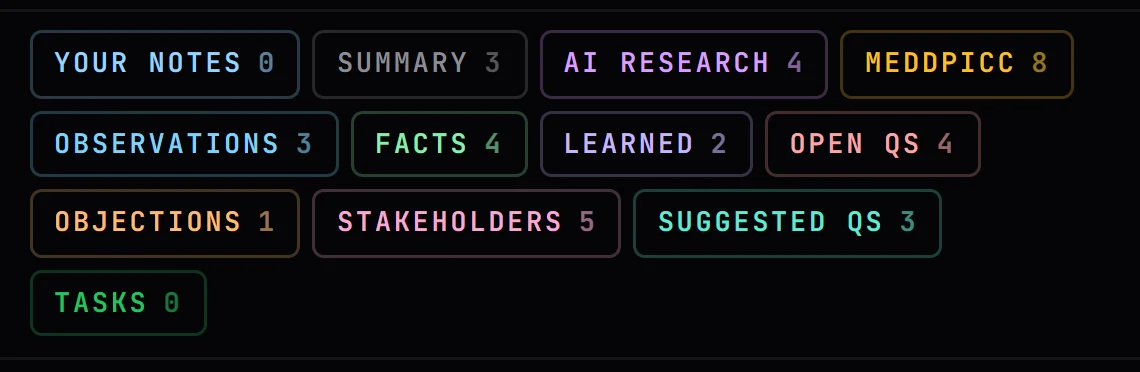
Veracity's live notes include a MEDDPICC section that fills in while you talk, and the recap after the call has Diagnosis, MEDDPICC, Risks and Improve sections. MEDDPICC also feeds the rating of your calls. Every MEDDIC letter is one of those eight.
Where do the extra letters go wrong?
- Adding two fields nobody fills in. A blank Paper process line on every deal tells you nothing. Ask the first Paper process question as soon as a date comes up.
- Asking about contracts before there's a problem. "Who reviews contracts?" on a first call, before the buyer has named a pain, sounds like you're rushing them. Start with the pain and what it costs.
- Writing one vendor name under Competition. List every option the buyer has, including the in-house team, the tool they already pay for and doing nothing.
- Taking the champion's word on the paper process. Your contact may never have bought from a new vendor before. Ask who runs procurement and legal, and how the last purchase went.
- Running all eight letters on a small deal. If the buyer signs on standard terms and has no other option in view, the two extra letters add admin and no insight.